Friday, September 12, 2014

Marty Friedman - Inferno


In a heavy metal world populated by curious characters, Marty Friedman is right up there in the 'path less travelled' stakes.  Having played with Megadeth through the 1990's, from the legendary Rust in Peace through to the infamous Risk, he upped sticks and headed off to Japan.  Subsequent developments included involvement with progressive rock bands, video game/anime soundtracks, covers of various J-Pop tracks and collaborations with Japanese Idol group Momoiro Clover Z.  And also a bunch of appearances on assorted Japanese television programmes, where he became known as Hebimeta-san, or in Anglicised terms, Mr. Heavy Metal.

You can't make this stuff up.

Anyhoo, I'll freely admit to having heard absolutely none of Friedman's work outside of Megadeth other than his guest spot on the opening track of Jeff Loomis' last solo album (ironically he's not even the only Megadeth ex-guitarist on that album, with Chris Poland also getting involved).  However, his latest solo album Inferno was picking up some solid buzz on the internet from reputable sites like Metal Injection, so I took a punt on it.

It's bloody good, to be honest.

Inferno doesn't follow the standard instru-metal formula of basically just having 11 or 12 tracks of end-to-end shredding.  There's certainly a decent quantity of shredding here, but the writing has clearly been song-driven rather than solo-driven and the range of material on Inferno is a huge plus.

Of course there are some out-and-out shredfests, like Inferno and Steroidhead, but the execution on these is nothing short of flawless and, at times, jaw-dropping.  Credit is due to the songwriting here, as even the more traditional tracks weave their way through a variety of moods, never dwelling on a particular riff or solo for too long, and constantly keeping things interesting.

With his pedigree, you'd expect Friedman to be all over that, but there's a great deal more on offer here.  

The aptly-titled Wicked Panacea layers electric guitar over a wicked flamenco acoustic backdrop (courtesy of Rodrigo y Gabriela) and alternates seamlessly between acoustically and electrically driven sections.  Danko Jones provides guest vocals on the straight-ahead rocker I Can't Relax, which sounds something like classic rock and roll jumped into a time machine and encountered thrash metal 60 years later.  And by this point, we're only at track five!

Given it's Marty Friedman, so a degree of weirdness is expected (indeed, necessary), and the best example here is Meat Hook.  You've probably never heard a saxophone / piano / guitar duel in a metal track before, and particularly not over a thrash metal backdrop.  That's hardly surprising, since it sounds like a completely ridiculous idea.  And yet somehow it ends up coming off as one of the album's highlights.

The second half of the album ups the ante when it comes to intensity, with the brutal Sociopaths featuring a great guest spot from Revocation front man Dave Davidson.  Again, Friedman goes against the grain to good effect - the bulk of the track is genuinely heavy but it veers into an uplifting neo-prog solo at around the 4 minute mark.  It's followed by the similarly vicious, though more direct, Lycanthropes and that in turn is followed with the brilliantly contrasting Undertow, a glorious metal soundscape if I've ever heard one.

Rounding the album out are Horrors, which ends up being something of an intriguing virtuoso journey through all the moods and styles captured throughout the album, and a very proggy reprise of opener Inferno which provides a grandiose closing.

And at the end of all of that, if you're anything like me, you sit there with a slightly dazed look trying to comprehend what you've just heard, before rapidly reaching for the repeat button.  I certainly won't be rushing out to track down his J-Pop back catalogue, but for now Marty Friedman has come right out of leftfield to provide one of the best albums I've heard so far this year.

Friday, September 5, 2014

Mastodon - Once More 'Round The Sun


Mastodon's last record, The Hunter, was clearly a major attempt by the band to bring a more accessible sound and a move away from the progressive expanses of Crack the Skye and the crushing heaviness of Blood Mountain.

I'll confess that I really wanted to love The Hunter but ultimately it was just too uneven.  There were moments of sheer brilliance - Black Tongue was foreboding and imperious (and insanely catchy), Curl of the Burl was both sludgy and bouncy (and insanely catchy), Blasteroid was incredibly energetic (also insanely catchy) and Spectrelight remains a huge personal favourite, marrying the viciousness of early Mastodon with an awesome hook.  But every time the album started to get a roll on with a series of good songs, something a little mediocre or not-very-interesting would kill the momentum - like The Octopus Has No Friends which had an undeniably brilliant title and not much else.

In short, if Mastodon could produce an entire album that was as good as the really good stuff on The Hunter, it would be amazing.

Once More 'Round the Sun, unfortunately, is not that album.  The approach and overall aesthetic is pretty similar to its predecessor, and so are the results. 

Once again, there are moments of awesomeness.  High Road takes a simple but effective approach with a super-chuggy, super-chunky main riff that has the same sort of inevitable momentum as, say, a charging rhinoceros.  The Motherload is a really nicely-crafted, catchy gem of a track with a brilliantly ethereal bridge that recalls Crack the Skye and features great contributions from the entire band. And then there's Halloween, a rollicking up-tempo number which pulls countless tricks, delivers some brilliant treats (including a great solo and an absolute payoff of an outro riff) and wastes not a single one of its 279 seconds.

The problem, once again, is that this stuff is so good that it makes the filler really obvious.  Asleep in the Deep sort of plods along without really offering a lot, Aunt Lisa has a minor identity crisis, and opener Tread Lightly comes across like a less menacing, and therefore less interesting, version of Black Tongue.  These tracks all sounds a bit too... safe... and one of the hallmarks of Mastodon's best material has been an undeniable ability to push the boundaries of heaviness and prog.

So for me personally, Once More 'Round the Sun ends up as another enjoyable, but somewhat frustrating, Mastodon record.  One that, over time, will most likely be culled down to a handful of tracks on my iPod.

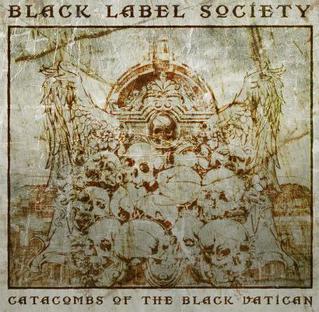
Black Label Society - Catacombs of the Black Vatican


I wouldn't call myself a huge follower of Zakk Wylde's Black Label Society, but I'm just familiar enough with them to conclude that Catacombs of the Black Vatican is the sort of album that existing fans will probably like but which probably won't turn them on to a big new audience.

In short, it is Black Label Society doing what they have largely always done - hard rock with guitar squeals, impressive solos, and the odd quiet song lobbed in for good measure.

The songwriting on here is very much intro-verse-chorus-verse-chorus-bridge-solo-chorus-outro, but that's never been Zakk Wylde's strength.  His biggest asset has always been his insane guitar ability, and the biggest redeeming feature of this record is that the guitar work has all the hallmarks one has come to expect.  The riffs sound huge, the squeals are... squealy, and the solos are excellent.

Tracks like Fields of Unforgiveness,Heart of Darkness and Damn the Flood are solid hard rock numbers, built largely around a solid riff and a good chorus, which come to life thanks to Wylde's guitar work.

There's no overwhelming musical revelations on offer here, but equally, Catacombs of the Black Vatican isn't the sort of record you turn to for that sort of thing.  On the other hand, if you want some hard rock with really BIG guitars, you'll probably enjoy it.

Thursday, August 28, 2014

John Garcia - John Garcia album review


It's not quite Chinese Democracy, but it's still a minor miracle that the solo album from legendary vocalist John Garcia (Kyuss, Vista Chino, Unida, Slo Burn, Hermano) has finally seen the light of day.  It was originally slated for a 2008 release as 'Garcia v. Garcia' but then got shelved when Kyuss Lives! got rolling, had a big legal fight with Josh Homme and Scott Reeder, and then continued rolling as Vista Chino.  

Thing is, this project is clearly very important to Garcia because in order to finally get it done, he turned down offers to record new albums with Vista Chino, Hermano and Unida.  And much as I'd have liked to hear new albums from any or all of those three bands (particularly the incredibly overlooked and under-rated Hermano), I'm probably more intrigued by this fabled record finally getting a release.

So, the obvious question is what does it sound like and is it any good?  To which the answer is, it has the desert rock vibe with which Garcia is universally associated in spades, and yes, absolutely.

Opening track My Mind has a particularly doomy opening riff, over which a pissed-off Garcia snarls "What the hell are you saying, who in the hell are you talking to?  Won't you leave me alone" before locking into a tight upbeat groove.  It's a catchy, powerful and impressive start to proceedings which highlights Garcia's considerable songwriting ability.  On one hand, that ability might well be presumed given the quality of Garcia's resume - on the other hand, it's really the first time he's been the primary songwriter on an album.  

And there is a ton of evidence on this album that this is a very welcome development.  Garcia's songwriting captures the desert rock essence and groove that fuelled Kyuss but he marries it with the hooks that were more typical of Hermano's material and also the occasional acoustic moment a la Murder One or Dark Horse II.  There's certainly shades of the recent Vista Chino material in there as well.

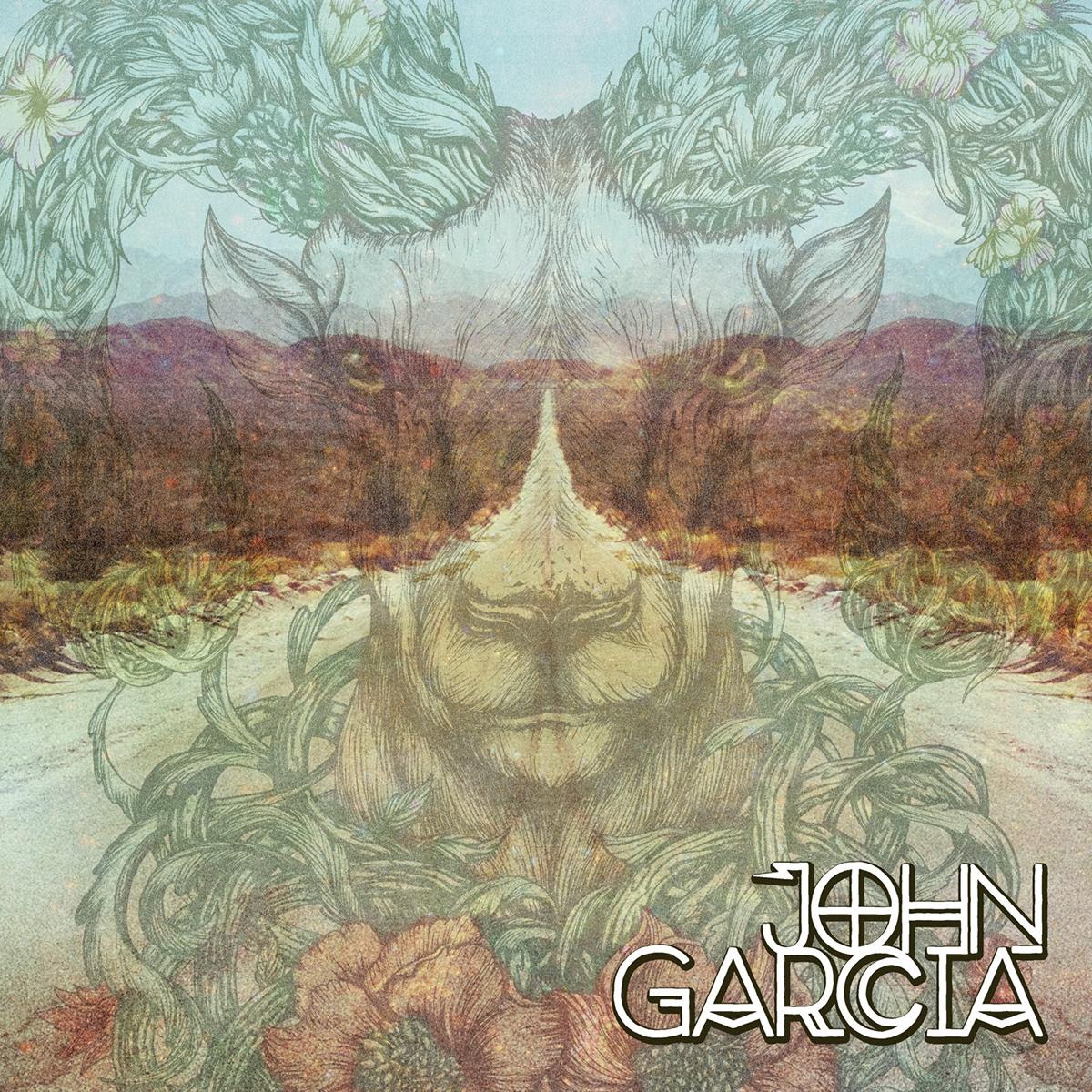
John Garcia's greatest accomplishment, however, is the fact that while those familiar flavours are there, this record does not sound quite like any of them.  Like the ram with the crazy-ass floral horns on its cover, it is its own animal.  It's tighter than Kyuss, more organic than Hermano, easy to get into without sacrificing the depth that only becomes obvious on repeat listens, and of course it's a showcase for Garcia's raspy, inimitable vocals.  It is definitively John Garcia - not in the personal, heart-on-the-sleeve sense that many solo albums can be, but in the sense that he's put a definitive personal stamp on the songs and the album.

If there's one criticism I have of the record, it's that it can get a little samey at times.  There's a lot of great mid-tempo desert rock grooves on here but having one or two more experimental tracks like the distortion v. Garcia of Confusion, or the brilliant acoustic closer Her Bullet's Energy (featuring a great guest spot from Robby Krieger of the Doors) would have added a lot of variety and depth to the record.

Of course, it does help that those mid-tempo grooves are all very solid, none more so than the insistent, driving one-note strum of His Bullet's Energy and the hammering, snarling stomp of 5000 Miles.  And to be entirely fair, the vast majority of punters who pick up this record will be expecting a solid helping of the desert rock for which Garcia is renowned.

It might have been years in the making, but John Garcia has such an abundance of quality that I can only hope he finds time to produce another solo record at some point.

Friday, June 13, 2014

Down IV Part 2 EP review


Rejoice, fans of the riff, for the second of Down's four planned EPs is the best thing they have released in a number of years.

Down IV Part 2 strikes pretty much the perfect balance between the direct, aggressive style of historical favourites like Ghosts Along the Mississippi and Lifer, and the sludgy epics like Bury Me In Smoke that the New Orleans heavyweights are equally famous for.  Of the EP's 6 tracks, basically 3 fall into the former camp and 3 into the latter.

Opener Steeple certainly sets the tone, with a particularly evil-sounding howl from the legendary Phil Anselmo over a particularly evil-sounding riff.  Down were always clearly big Black Sabbath fans - the doom metal influence is just a little more obvious this time around.  The track does a great job of tempo-shifting between doomy heaviness and some faster riffs to keep it interesting.

Next comes one of the great one-two punches in Down history.  Firstly, We Knew Him Well, which launches into what might the most potent riff Down have ever written while Anselmo delivers a biting and occasionally indecipherable vocal performance (but you'll still pick out the best lines, like "Distrust the honest!").  Down have written plenty of headbangers in their time and this is one of the best.  Better yet, it's followed up with Hogshead / Dogshead, which is every bit as good.  This one has Pepper Keenan's fingerprints all over it from the word go - it's more than a little reminiscent of some of the great Keenan-era Corrosion of Conformity material (particularly Wiseblood) particularly in terms of the guitar work and the lead / rhythm guitar interplay.  Having said that, as a straight-up band effort this is an awesome performance - bass and rhythm guitar blend seamlessly on the riff, while Pepper shreds some great solos and Jimmy Bower absolutely kills it on the drums throughout.

After that double blow, Conjure slows things down with 8 minutes of fairly overt - but very good - Sabbath worship.  The sludge is strong on this heavy, atmospheric number and the guitar work gives it a real edge.  Keenan, in my opinion, continues to be one of the most under-rated guitarists on the hard rock and metal scene and his combination with new band member / former stage manager Bobby Landgraf (who replaced Kirk Windstein) is pretty much seamless.

Sufferer's Years is the last of the faster tracks and although Keenan and Landgraf do another stellar double-act here and Bower pummels the cymbals into oblivion, this is probably Anselmo's best moment on the record as he alternates between his powerful mid-range sound and snarly upper-range.

Bacchanalia is a pretty apt way to round things out with a bang.  At almost 9 minutes it seamlessly winds its way through a lot of the sounds found throughout the album - doom, sludge and straight-up riffs - before closing with an acoustic outro reminiscent of Jail or Pray for the Locust.

Down have provided six tracks of sheer, undiluted quality on this EP, and frankly it's a stunning example of why more bands might like to consider this approach to recording music.  Excellent stuff.

Thursday, May 29, 2014

Conquering Dystopia album review


So many times, I've heard a metal band open a track with a great riff, only to abruptly lose interest when the vocals kick in.  No matter how hard I try, the guttural vocals generally just don't do it for me.  There's some exceptions to this - Opeth are an example of a band where I love the way the harsh vocals blend seamlessly with the music - but in general I just don't get them.  Which is kind of a shame, because musically there's a lot to like about many of the bands at the harder edge of the metal spectrum.

It's entirely possible, therefore, that I wouldn't have liked Conquering Dystopia if it had vocals and wasn't an instrumental record.  But it doesn't, and it is, and I do like it, rather a lot, in fact.

As a huge fan of Nevermore, I've followed Jeff Loomis since their untimely split, and hence how I stumbled across this.  And apparently the band's line-up is an enormous wet dream for some metal fans because of the combination of Loomis and some of the other guys in the band, although I know absolutely nothing about them - other than that they turn in some very fine performances here.

And performance, alongside composition, are two of the first words that come to mind on this album. Rightly or wrongly, metal (or at least some of it) is often analogised to classical music.  Conquering Dystopia is a great example of why that can be true - combining intricate, complex songs, compelling leads, and outstanding playing.  Like much classical music, there's recurring themes throughout - in this case linked to the dystopian future referenced in the title (as if song names like Prelude to Obliteration, Totalitarian Sphere, and Nuclear Justice weren't enough to tip one off to that).

And despite the inevitable sonic assault that one would expect given those themes, and that line-up, that sense of musicianship also provides enough dynamic balance to (mostly) prevent it getting repetitive.  Tracks like Lachrymose, Doomsday Clock and Resurrection in Black provide a breather - sonically and dynamically - and a break from the intensity of the heavier tracks.

Of course, to actually enjoy it properly, you will have to listen.  This is not an album that you can just throw on in the background and expect to get the most out of it.  This is an album that demands your attention and will reward you for it - there are lead guitar parts that will send chills down your spine, drum parts that will have you gasping in amazement.

And it is very much an album.  So often these days, I'll listen to a new piece of music, and instantly hook on to a few tracks.  And then maybe a couple more will grow on me.  And over time, it becomes not so much an album at all as really just a few good tracks and some that get skipped over.  On the other hand, Conquering Dystopia is a record I actually can't conceive listening to in parts, or on shuffle.  It's a beginning-to-end deal, a modern symphony of sorts.

Having said that, at 53 minutes, it's possibly a touch too long for an instrumetal record - dropping a couple of tracks could potentially have been the difference between 'very good' and 'great'.

Nevertheless, it is very good indeed, and if you like your metal a bit more cerebral then you'll love Conquering Dystopia.

Thursday, May 15, 2014

Fu Manchu - Gigantoid album review


It was starting to get to the stage where Fu Manchu were essentially stoner rock's answer to AC/DC or Motorhead.  After a great series of albums through the late 1990's, peaking on 2000's King of the Road, everything since followed a largely similar formula: big fuzzed-out riffs, lyrics about aliens, girls, and/or cars, and plenty of mid-tempo crunch.  The material was decent, but it wasn't anything you hadn't heard before, and lacked some of the memorable elements of their earlier material - the sleazy groove of Weird Beard, the dual-guitar mayhem of Tilt, or the sheer hooks of tracks like Evil Eye.

Gigantoid changes that up.  The sound is unmistakably Fu Manchu but there's nothing formulaic about this record.  Opening track Dimension Shifter starts with a classic Fu Manchu hook a la Evil Eye, but at the two minute mark it abruptly morphs into a groovy psychedelic instrumental jam.

Meanwhile, Invaders On My Back, rather than being the paranoid stoner jam that the title might imply, is a direct, angry number that is much more reminiscent of the band's punk influences.  It is, however, followed by the particularly groovy and far more accurately titled Anxiety Reducer, which features a stunning main riff that is the equal of anything on Daredevil or ...In Search Of.

The experimentation doesn't always quite work - the quiet loud quiet loud dynamic of Mutant is a bit jarring.  And sometimes it's absent altogether - Radio Source Sagittarius could have appeared on any of the last three or four Fu Manchu albums and the extended outro prolongs it a bit much.

But equally, there's some really deft touches throughout the album.  No Warning is an absolute full-throttle number that threatens to end at the tender young age of 35 seconds, before launching into another full-on assault to instead end at the not-quite-so-young age of 1 minute 25 seconds.

Nowhere is this more evident than The Last Question - a classic call-and-answer riff, a great groove, and a tasty solo characterise the song's first half, before the remaining four minutes transform into a wandering, psychedelic jam.

Overall, it's a fairly tightly-packed 39 minutes worth, with minimal filler, and enough variety to hold the ear of the discerning listener - and arguably the best thing they've released since King of the Road.  Gigantoid is unlikely to win Fu Manchu much in the way of new audience, but it certainly might rekindle the interest of a few older fans (this one included).